“Lighting is the key to creating spaces that heal, inspire, and transform the way we live and feel”
Lighting is no longer just about visibility—it profoundly influences how we feel, perform, and heal. Let’s dive into health & well-being with light. From the calming ambiance of a spa to the productivity-enhancing environment of a modern office, the right lighting design directly impacts our physical and emotional well-being. Backed by scientific research, healing lighting supports our body’s natural rhythms, reduces stress, and even accelerates recovery.
In this article, we dive deep into the science of wellness lighting, explore practical design strategies, and share how smart lighting creates healthier, happier spaces.
“Our eyes may see light, but our bodies feel its power—lighting influences our health, mood, and performance in ways we are only beginning to understand.”
— Dr. Mariana Figueiro, Circadian Lighting Researcher“
The Science Behind Healing Light: Circadian Rhythms and Beyond
Our bodies operate on a biological clock called the circadian rhythm, closely tied to natural light cycles. Disruptions—common in urban and indoor environments—can lead to sleep disturbances, fatigue, anxiety, and weakened immune response.
Photobiological lighting is designed to replicate natural daylight patterns to support this rhythm:
- Cool white light (4000–5000K) in the morning boosts alertness, cognitive function, and energy by stimulating the production of cortisol.
- Warm white light (2000–3000K) in the evening promotes relaxation and prepares the body for melatonin release and restful sleep.
- Flicker-free, dimmable lighting reduces eye strain and visual fatigue, improving comfort during prolonged indoor stays.
Fact: Research published in the Journal of Biological Rhythms highlights how appropriate light exposure improves sleep quality and mood regulation, proving the tangible benefits of circadian-aligned lighting.
Spaces Where Wellness Lighting Makes a Real Impact
Strategic lighting design matters most in environments where people spend extended time or require recovery:
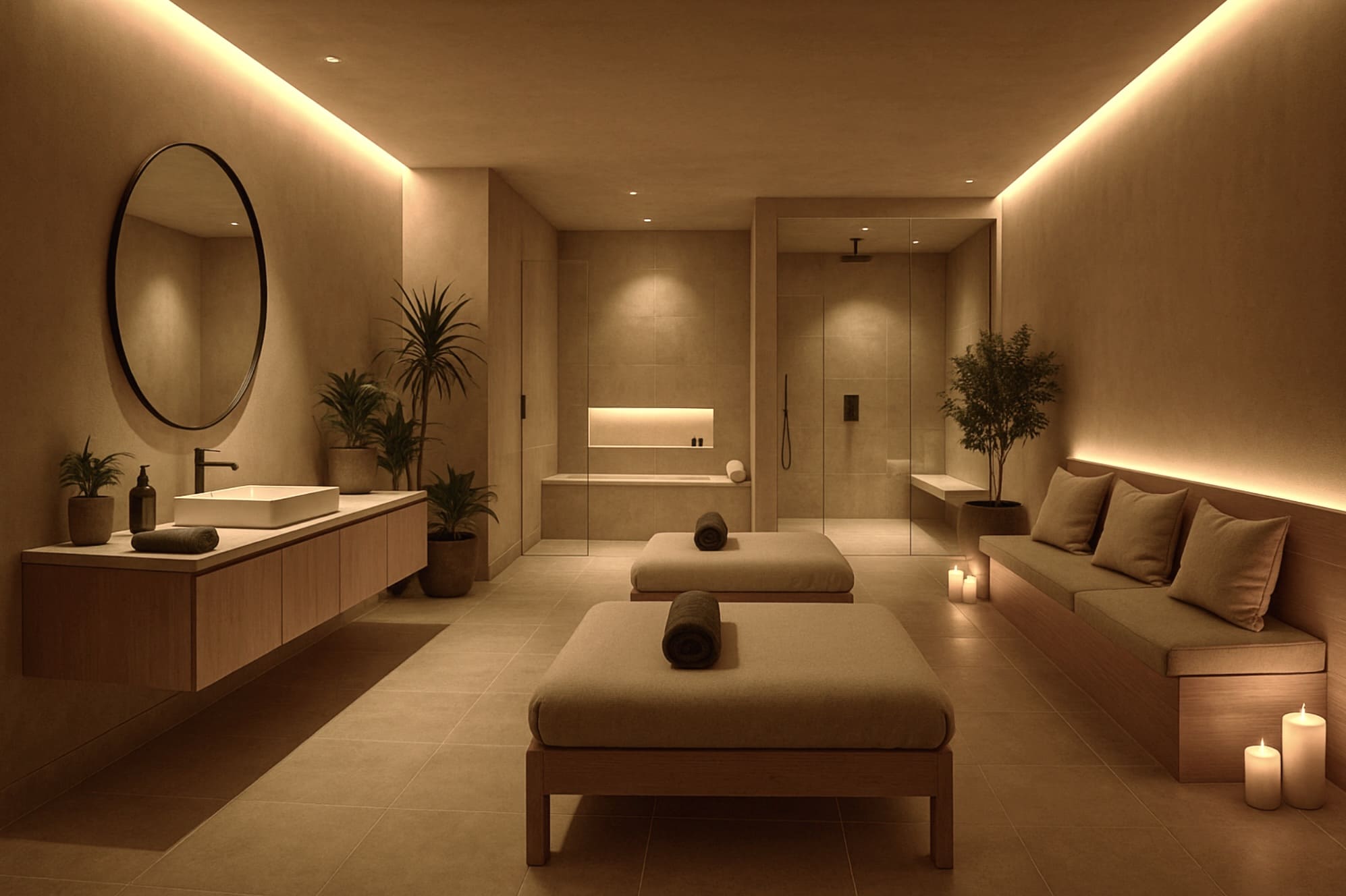
Spas and Resorts: Low-glare, warm ambient lighting induces deep relaxation and stress relief.
- Wellness Offices: Bright, high-CRI lighting enhances focus and cognitive performance, reducing mental fatigue.
- Hospitals and Recovery Rooms: Lighting systems that adjust color temperature encourage natural sleep cycles, speeding healing.
- Meditation and Therapy Rooms: Soft, indirect light creates calm, supportive atmospheres vital for mindfulness and emotional balance.
Lighting here doesn’t just decorate—it actively participates in healing and well-being.

Key Design Principles for Health-Focused Lighting
To create spaces that truly support health and mood, architects and designers should focus on:
- Variable Color Temperatures: Adapt lighting to different times of day and functional needs.
- High CRI (90+): Maintain true, natural color perception to boost comfort and reduce cognitive load.
- Layered Lighting: Use ambient, task, and accent layers to avoid harsh contrasts that cause eye strain.
- Smart Controls & Personalization: Enable users to customize lighting for their unique preferences and circadian needs.
Human psychology shows that control over the environment increases comfort and satisfaction—empowering users with adaptable lighting is crucial.
Wellness Meets Sustainability: Creating Smarter, Greener Spaces
Health-conscious lighting can—and should—also be sustainable:
- LED technology reduces energy consumption by up to 75% compared to traditional bulbs.
- Motion sensors and daylight harvesting minimize waste by adjusting light levels based on occupancy and natural daylight.
- Long-lasting fixtures reduce maintenance and environmental footprint.
- Smart lighting design helps create spaces that are good for people and the planet, aligning wellness with ecological responsibility.
Real-World Examples: Healing Light in Action
Imagine:
- A yoga retreat where light gradually transitions from soft dawn hues to brighter midday tones, supporting energy flow and mindfulness.
- A hotel room that shifts from energizing cool light during the day to warm, sleep-promoting lighting at night, enhancing guest rest.
- A hospital waiting area bathed in calming LED glows, easing patient anxiety and fostering comfort.
These lighting interventions translate into measurable improvements in mood, satisfaction, and even clinical outcomes.
“Good lighting is not just illumination; it’s an essential element of well-being that supports the natural rhythms of life“
Sustainability at Scale
City lighting doesn’t need to drain the budget—or the planet.Switching from outdated sodium or halogen lamps to smart LED systems can:
- Cut electricity costs by up to 75%
- Reduce maintenance with longer bulb life (50,000+ hours)
- Support eco-certifications and urban sustainability goals
Pairing this with solar integration or grid-responsive controls increases resilience and reduces emissions across urban infrastructure.
Examples in Action
- A smart campus where pathways light up as students walk past
- A plaza that dims at midnight but brightens for early joggers at dawn
- A heritage district lit to emphasize architecture without overpowering it
These experiences are now possible—and scalable across entire districts—with the right design and technology.
Final Thoughts: Designing with Light to Heal and Inspire
Wellness lighting is more than a trend—it’s a vital design approach that fosters healthier, happier environments. By aligning artificial lighting with our natural rhythms and psychological needs, we create spaces that energize, soothe, and support life.
At Kaash Light Engineers, we specialize in crafting lighting solutions that go beyond aesthetics to enhance well-being and transform everyday spaces into sanctuaries of health.
Outgoing Links for Further Reading
The Impact of Lighting on Health and Wellbeing — Harvard Health Publishing
Circadian Lighting in the Workplace — Lighting Research Center
Lighting and Health — International WELL Building Institute
Explore more at www.instagram.com/kaash.eu